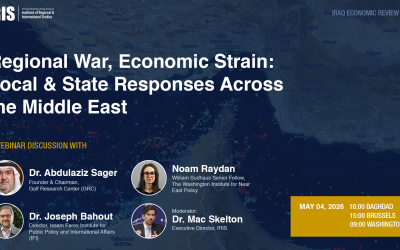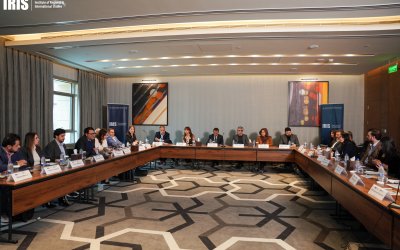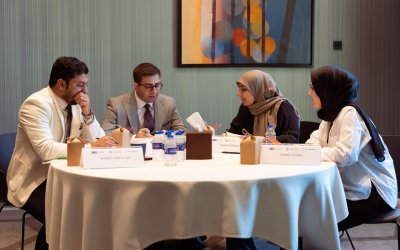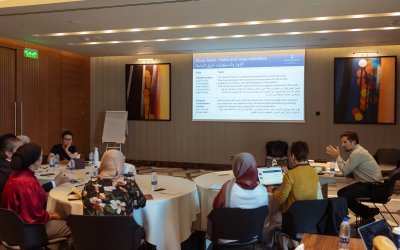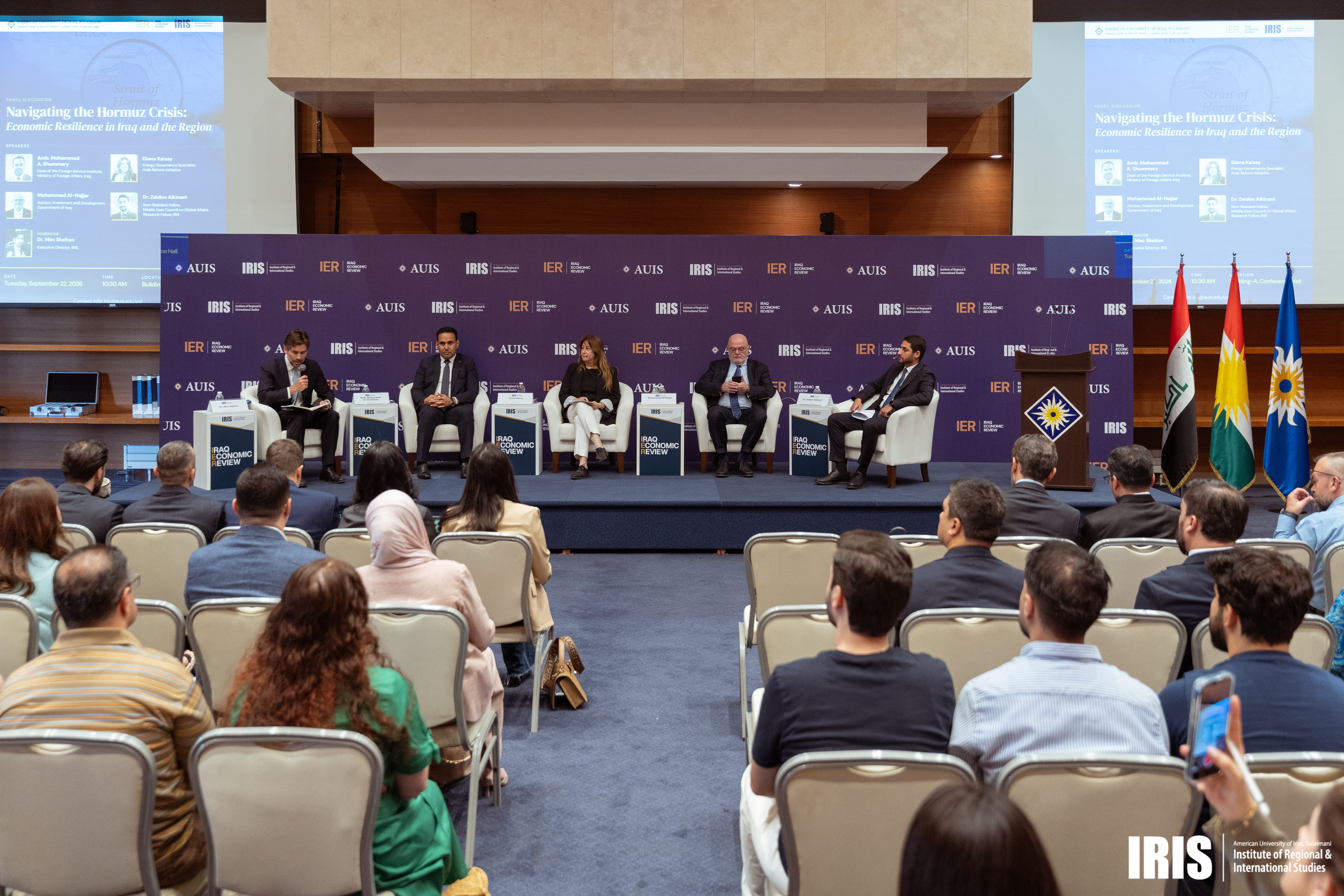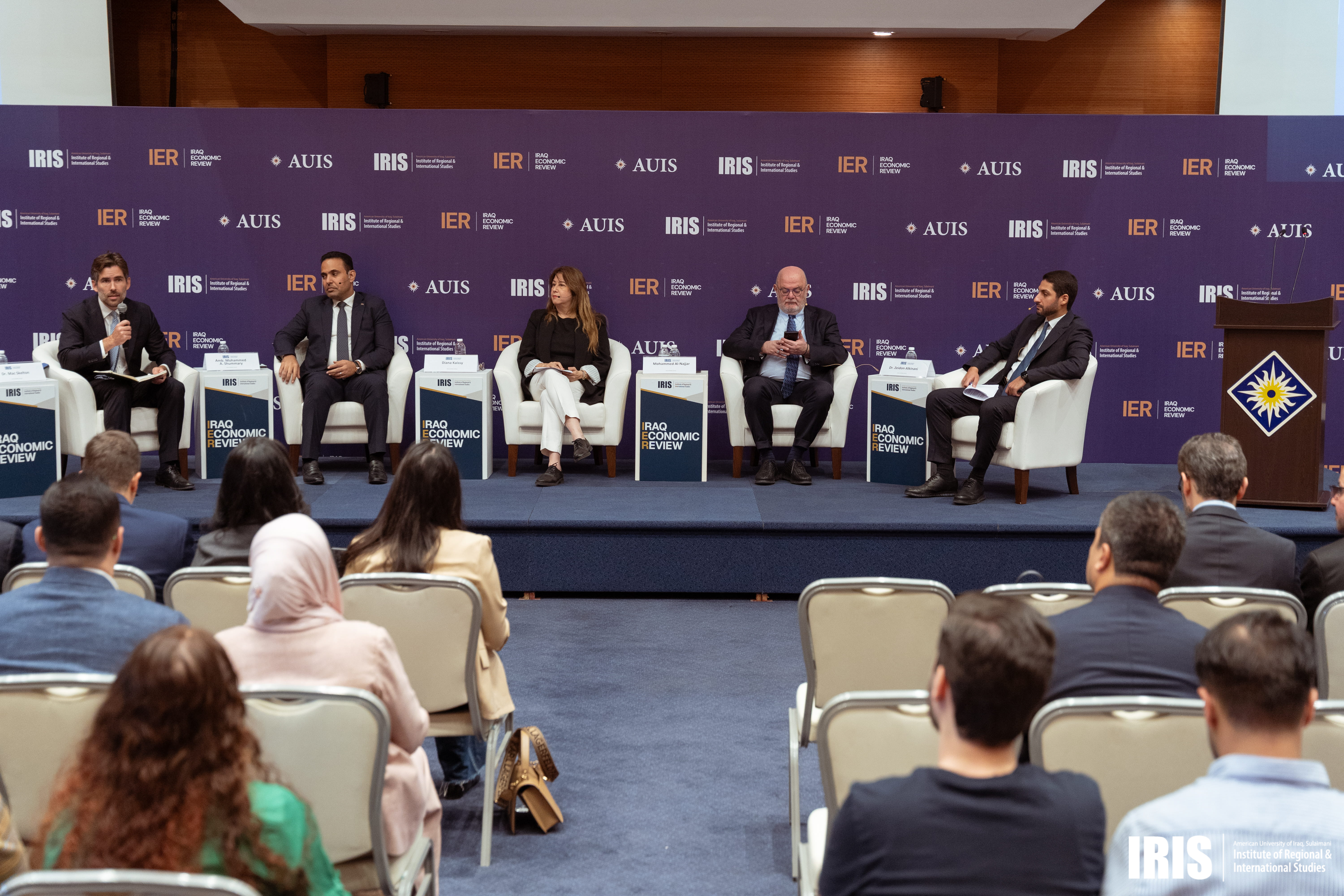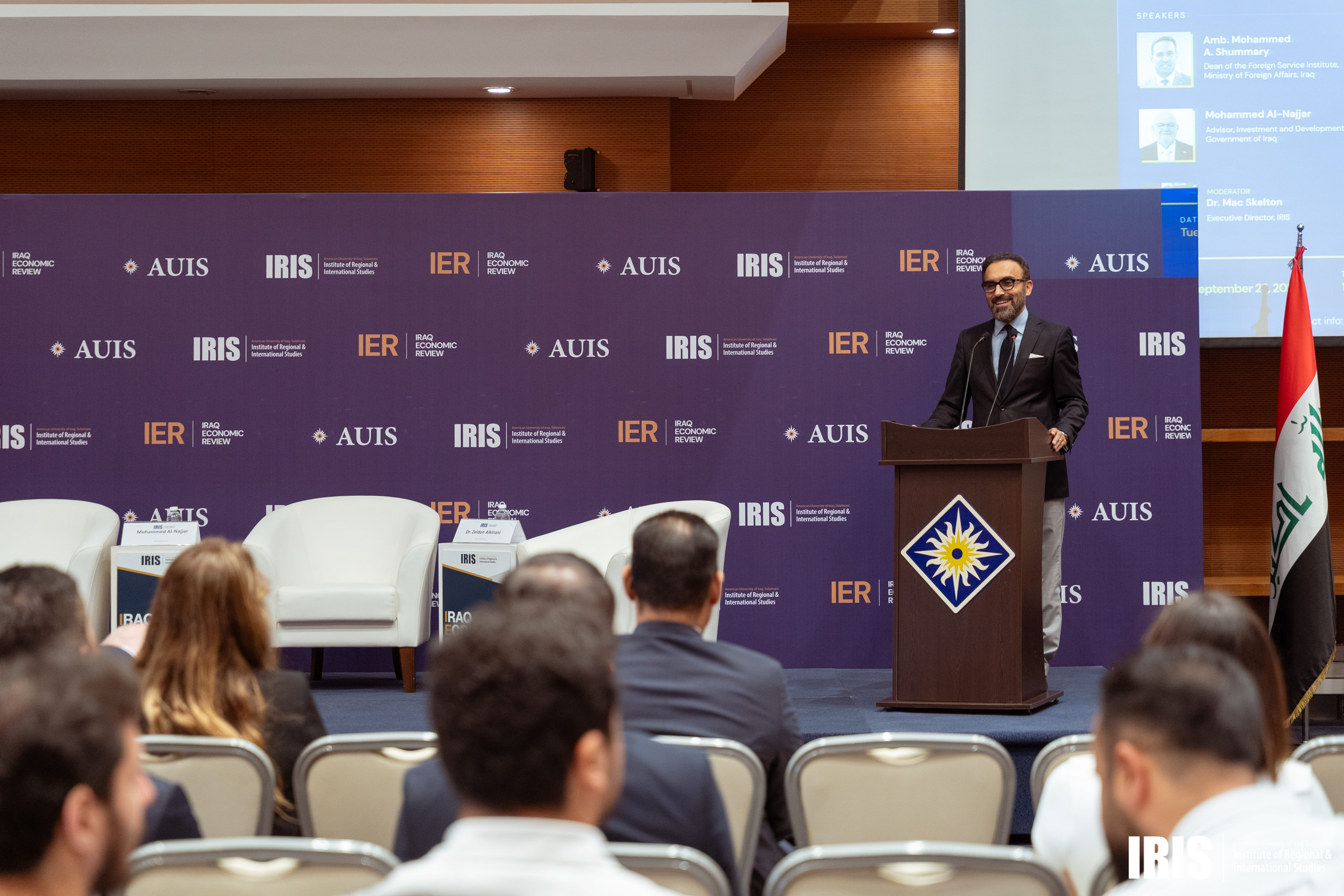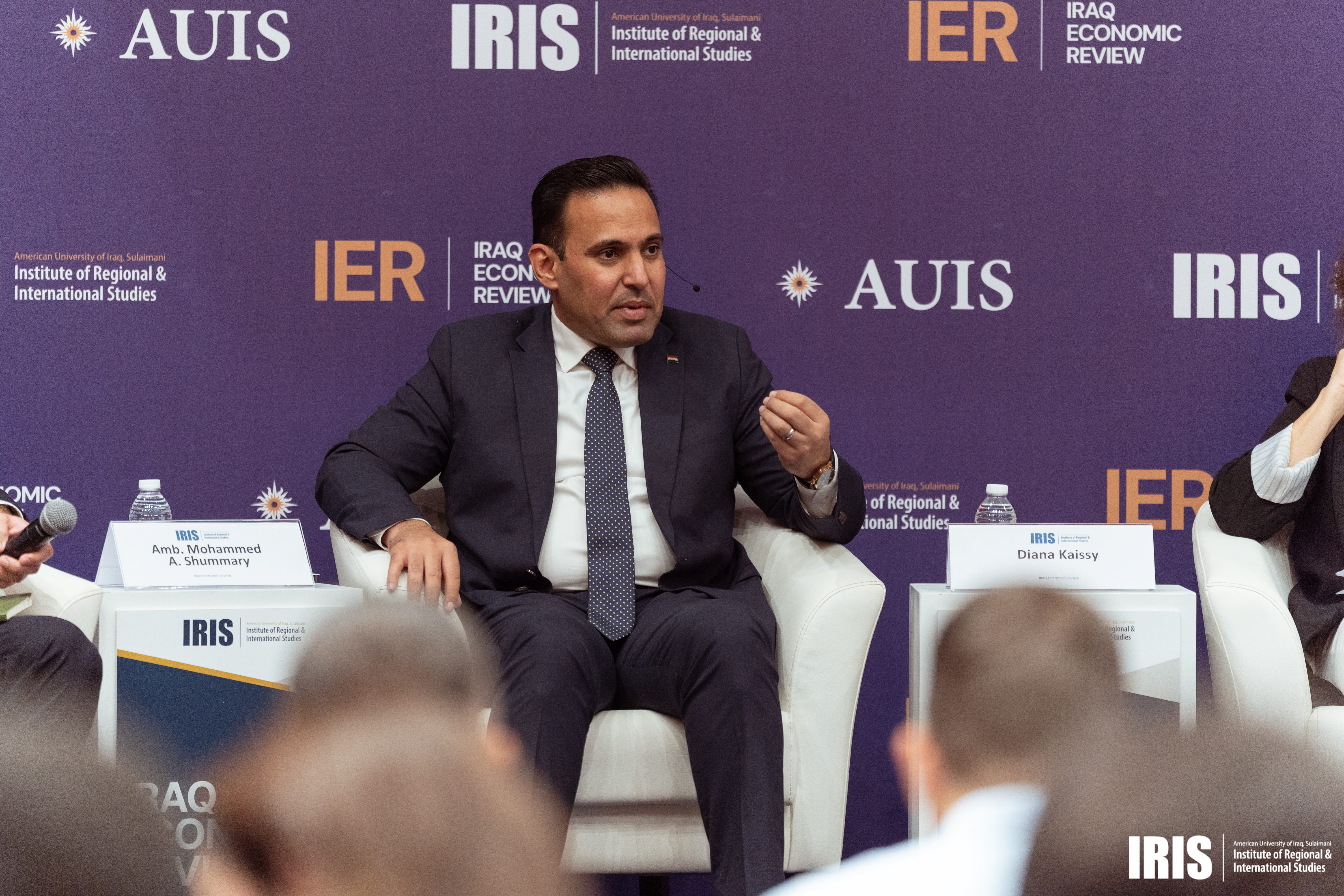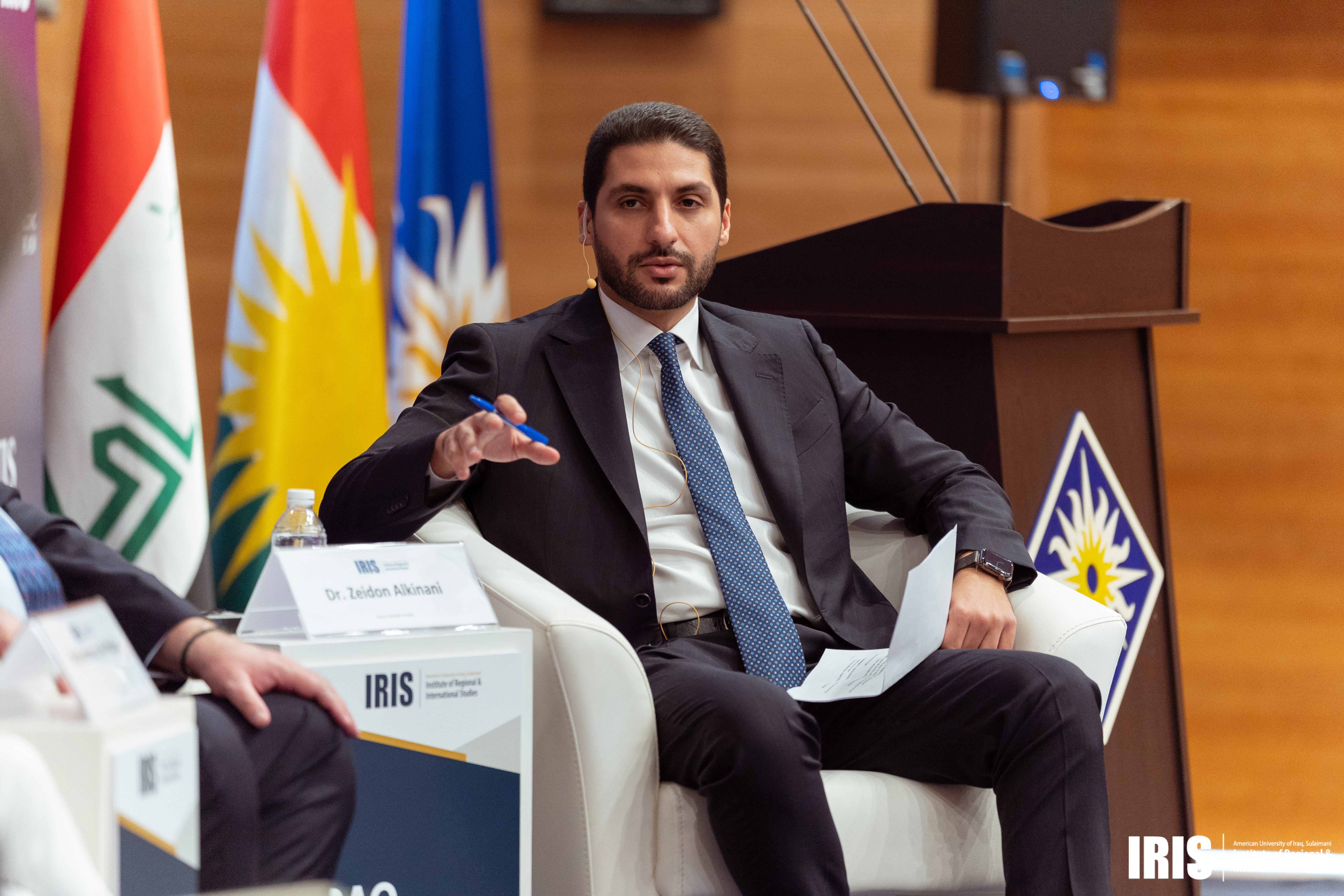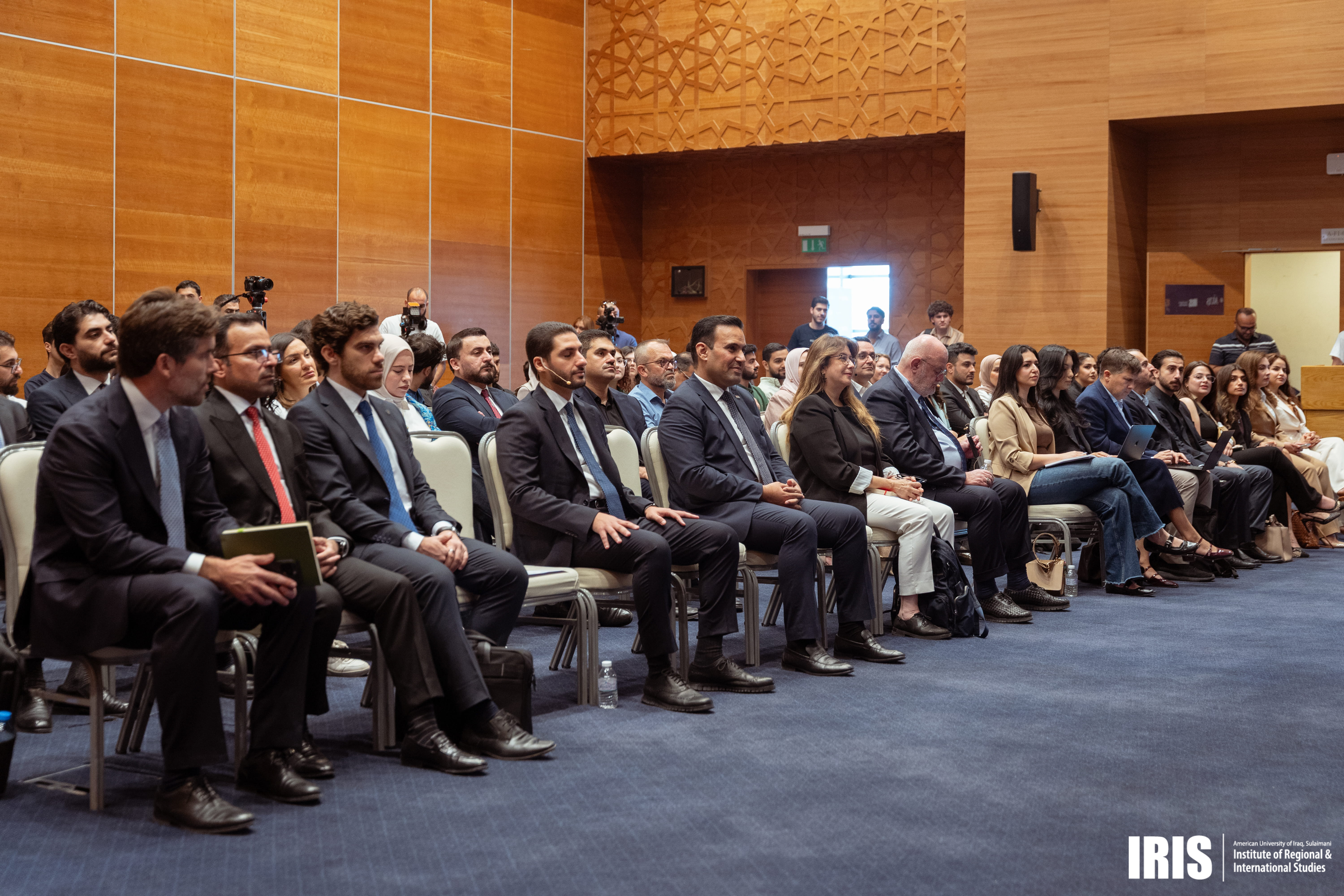
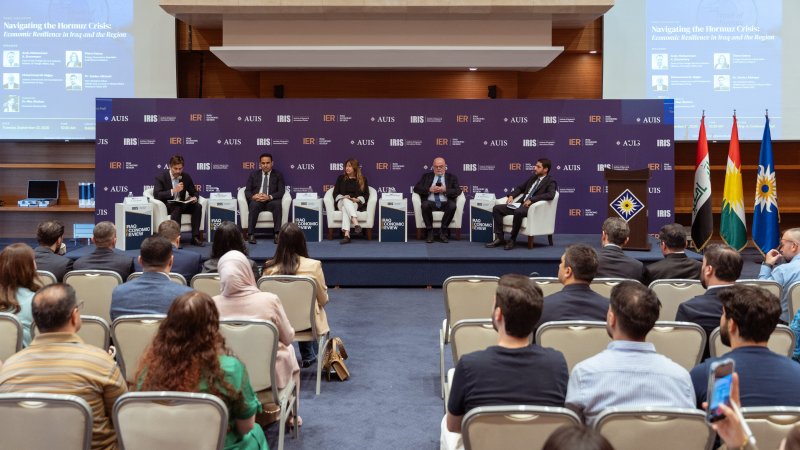
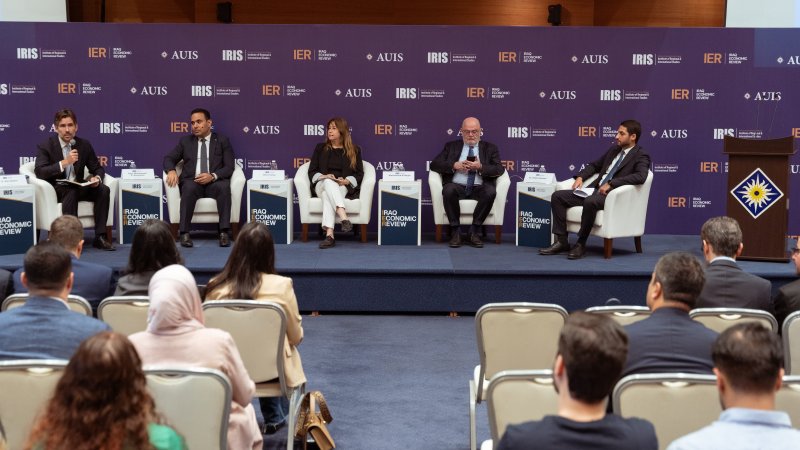
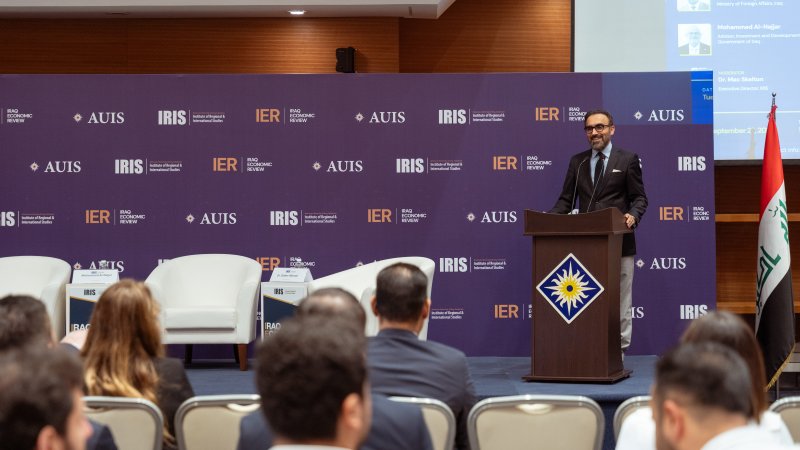
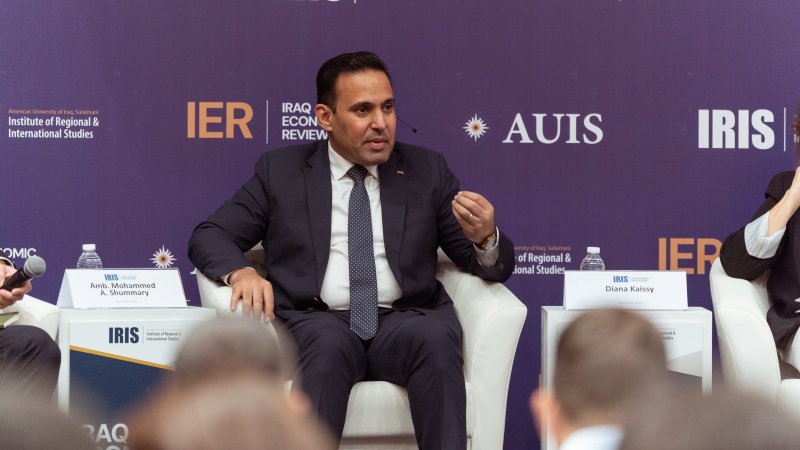
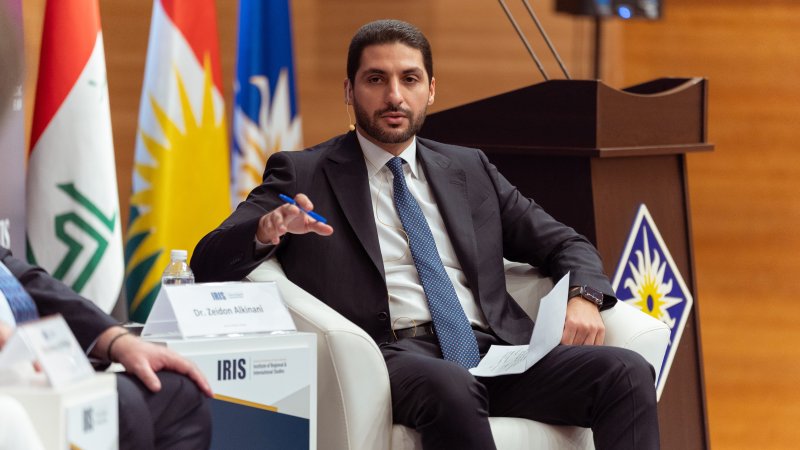
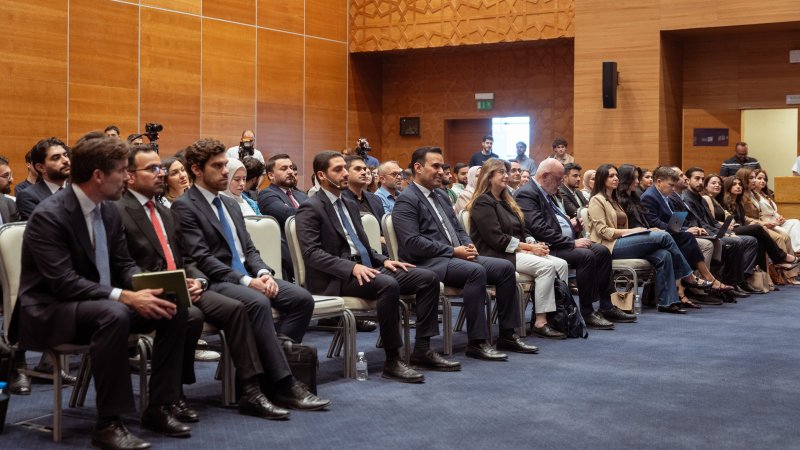
The Institute of Regional and International Studies (IRIS) at the American University of Iraq, Sulaimani (AUIS), in partnership with the Iraq Economic Review (IER), hosted a panel discussion on Tuesday, September 22, 2026, titled "Navigating the Hormuz Crisis: Economic Resilience in Iraq and the Region." The event brought together senior officials, policy advisors, and researchers to examine the economic and strategic implications of instability in the Strait of Hormuz for Iraq and the wider region.
The prolonged disruption of maritime transit through the Strait of Hormuz has triggered significant supply chain shocks across the Middle East. In Iraq, the crisis has drawn attention to fiscal vulnerabilities, while also raising questions about the viability of alternative trade routes and the resilience of the country's energy infrastructure. Against this backdrop, the panel brought together policymakers and regional experts to assess the broader economic fallout and critically evaluate the readiness of Iraq's government to absorb macroeconomic shocks, including the country's capacity to implement emergency fiscal measures and preserve stability in domestic markets.
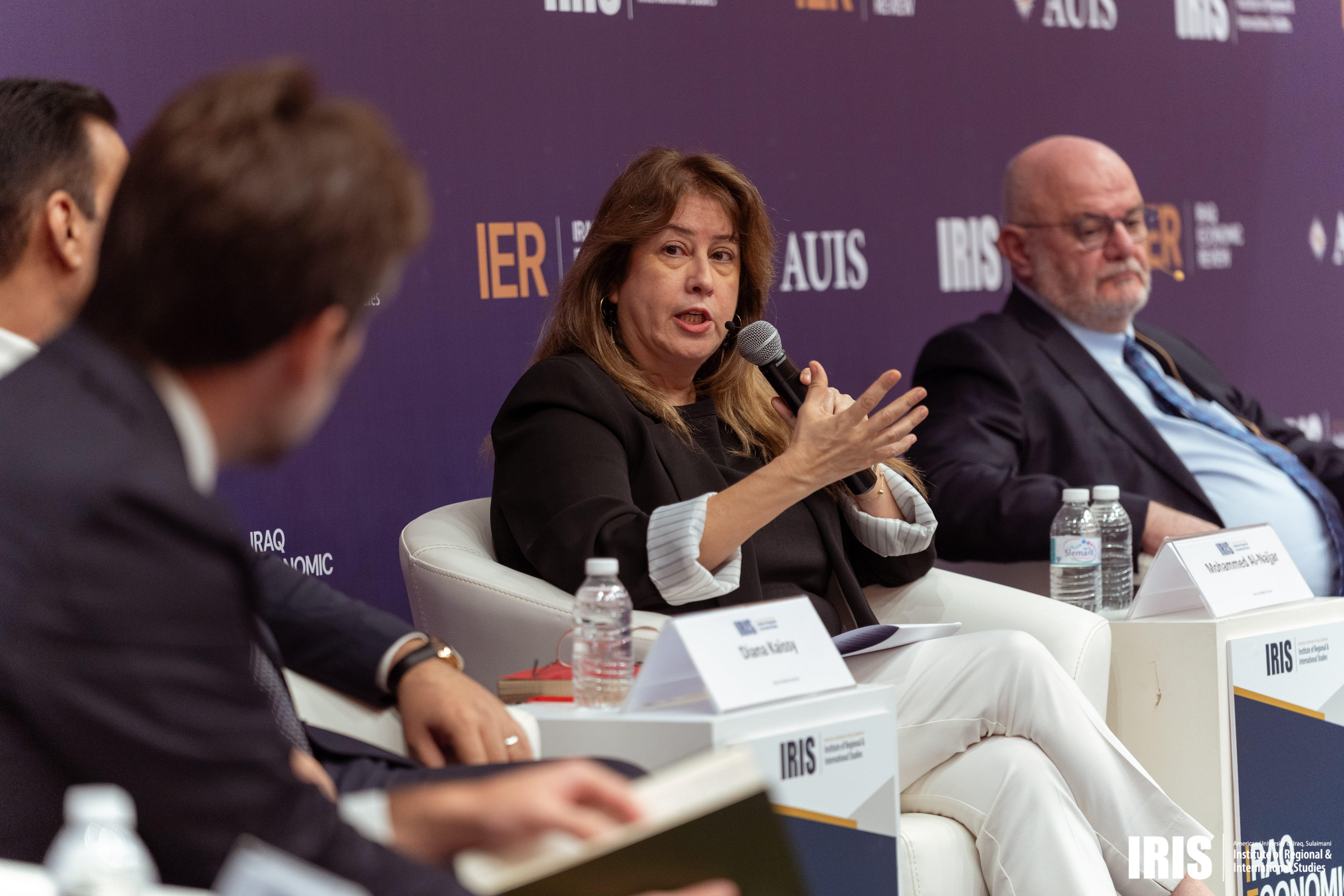
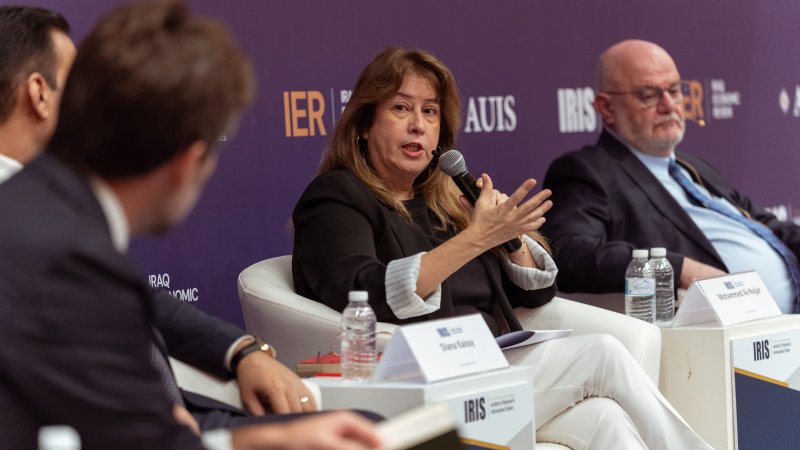
The panel featured Amb. Mohammed A. Shummary, Dean of the Foreign Service Institute at Iraq's Ministry of Foreign Affairs; Diana Kaissy, Energy Governance Specialist, and board member at the Extractive Industry Transparency Initiative; Mohammed Al-Najjar, Advisor for Investment and Development to the Government of Iraq; and Dr. Zeidon Alkinani, Non-Resident Fellow at the Middle East Council on Global Affairs and Research Fellow at IRIS. The discussion was moderated by Dr. Mac Skelton, Executive Director of IRIS.
This panel forms part of IRIS' economic research workstream, with analysis set to be published in November 2026.
IRIS continues to convene policymakers, researchers, and practitioners to examine the pressing economic and geopolitical challenges facing Iraq and the region.
The full video of the panel discussion is available below.