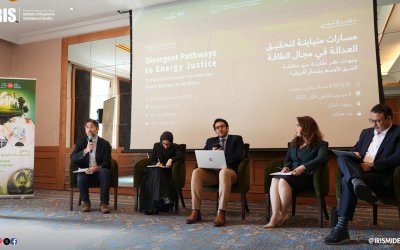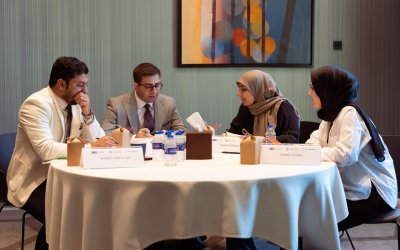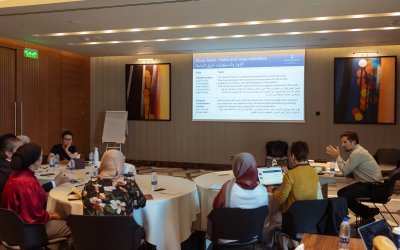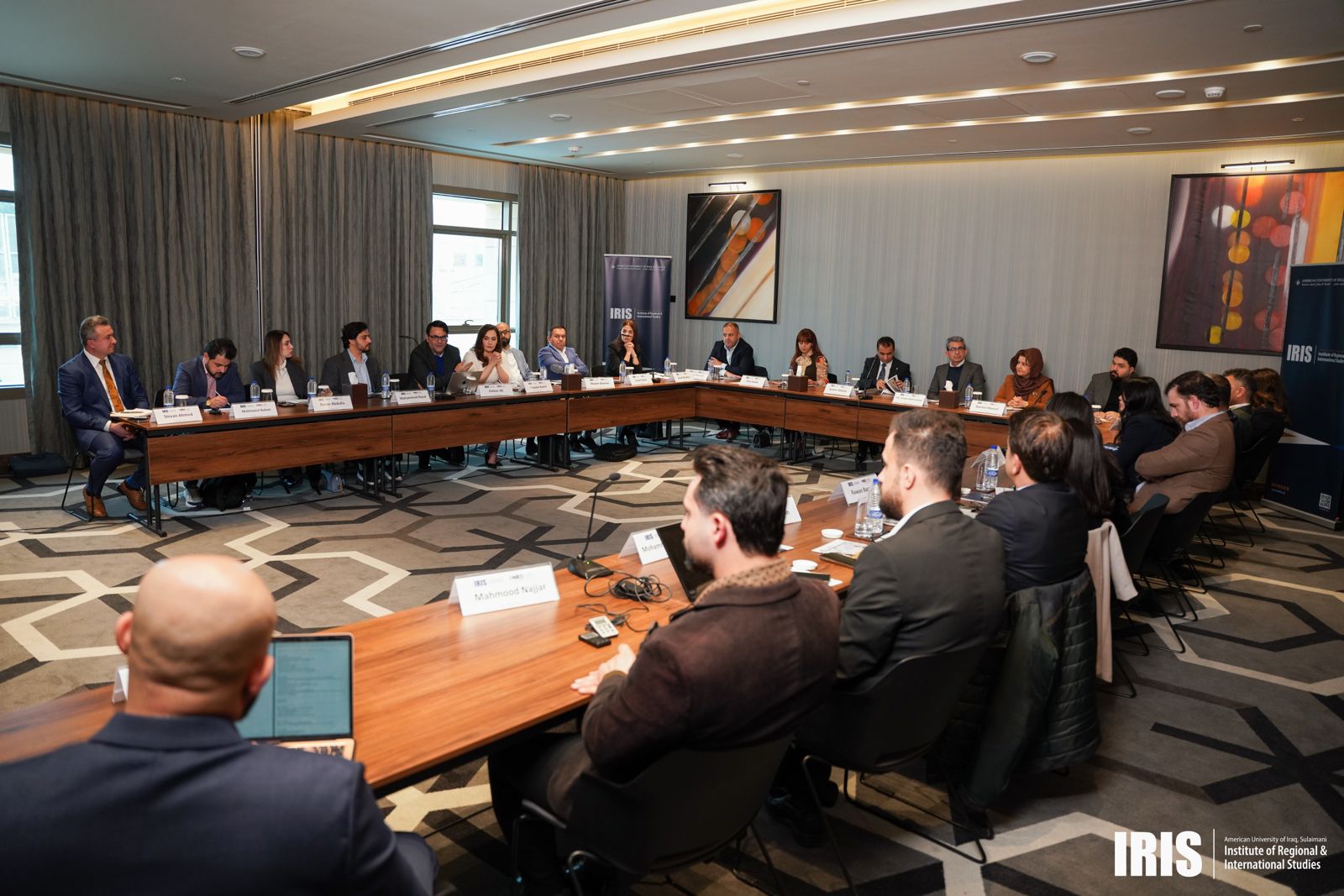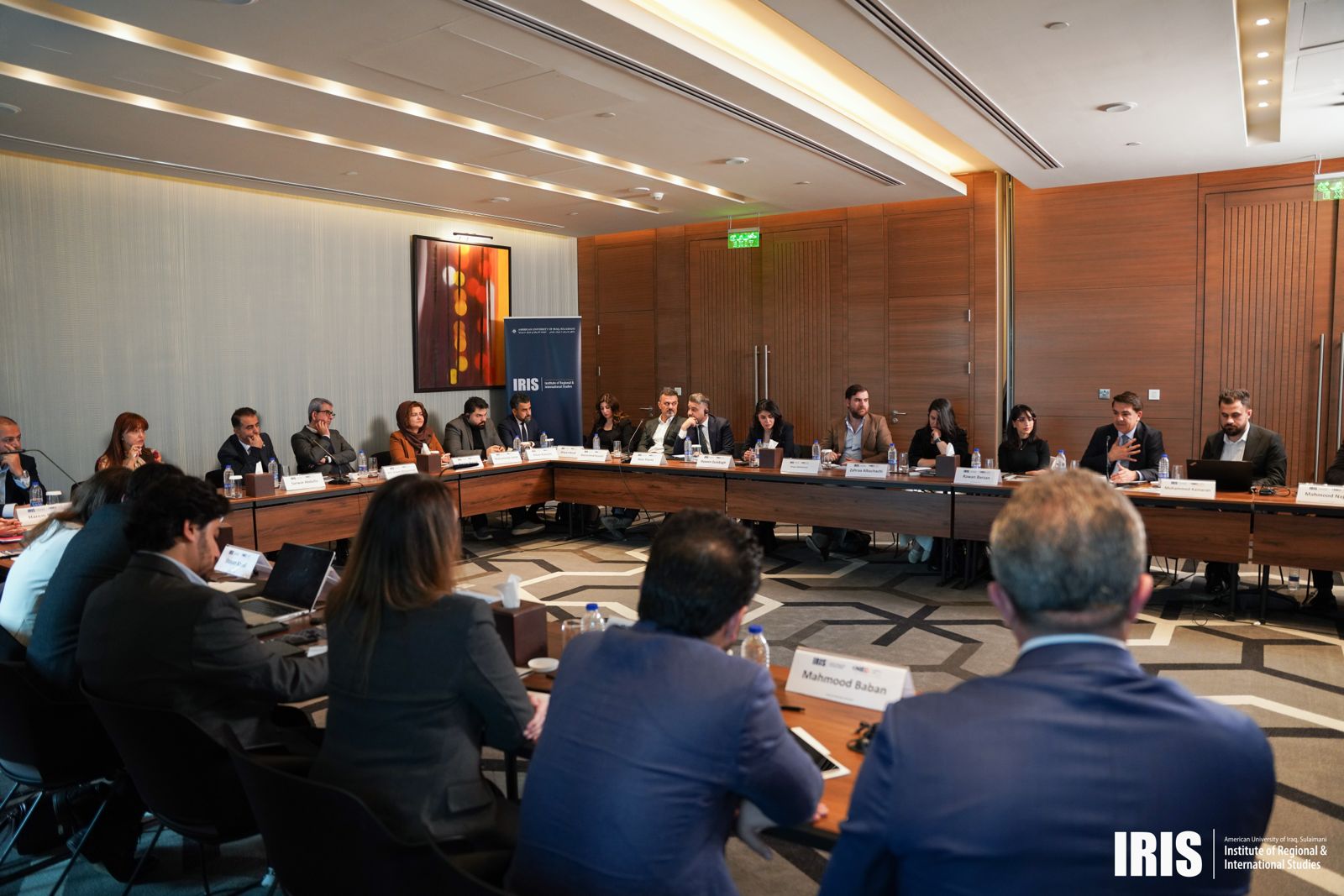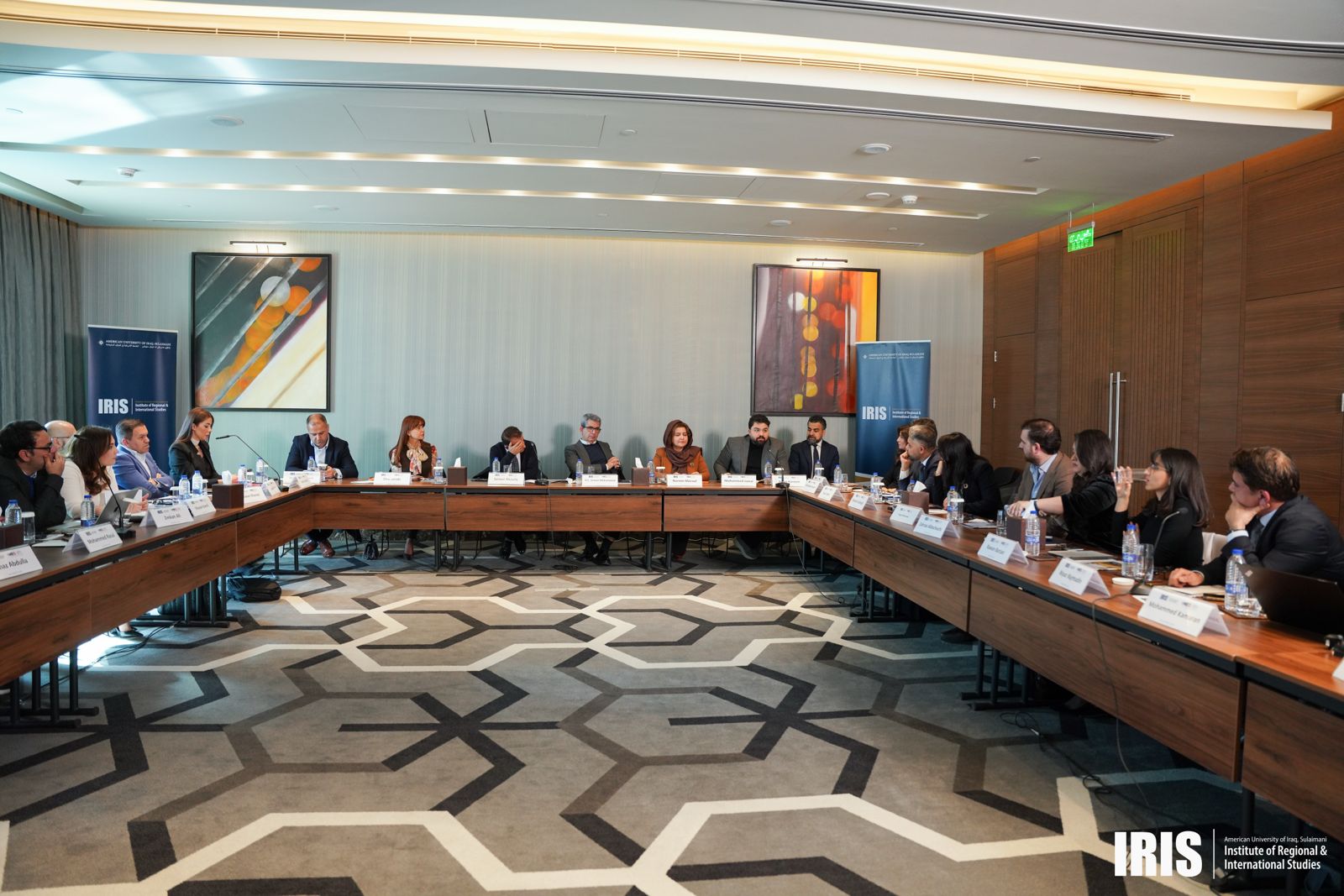




On 27 February 2026, the Institute of Regional and International Studies (IRIS) hosted a half-day consultative session to reflect on the future of the Iraq Economic Review (IER). Now entering its sixth year, the meeting brought together policymakers, private-sector representatives, academics, members of international NGOs, and civil society actors from across Iraq to evaluate the Review’s trajectory, identify priorities for the next three years, and ensure that IER remains analytically rigorous, policy-relevant, and firmly grounded in Iraq’s evolving political economy.
Discussions focused on two main pillars. The first examined Iraq’s domestic economy, the Review’s central focus over the past five years. The second explored Iraq’s regional economic relations, including ties with Gulf Cooperation Council (GCC) countries and neighbouring states, reflecting the government’s recent announcements of major projects to strengthen regional integration. Participants highlighted the importance of analysing these developments, leveraging expertise to understand the regional economic landscape, and enhancing Iraq’s engagement in the broader regional economy.
“Researching economic reform in Iraq requires strategic engagement with local institutions in key markets such as Saudi Arabia, the UAE, and Oman. In the absence of this, such initiatives risk being perceived as purely local, limiting their impact and their ability to drive meaningful change.” — Zina Al Janabi, COO of PwC
“Unboxing” Iraq: The Role of Research and Data in Attracting Investment
Stressing the importance of platforms such as IER, participants highlighted the need for economic research as a pathway to encourage external investment. Mohamed Jamal, Managing Director of KAPITA Research, noted that "Iraq is a black box to the world" and that "even major international companies don’t understand our market." As for solutions, he suggested that "unboxing Iraq will require serious investment in research, benchmarking, and data." Others stressed that research efforts focused on Iraq should not be carried out in isolation from the wider region. Zina Al Janabi, COO of PwC, clarified this point, noting that researching economic reform in Iraq requires "strategic engagement with local institutions in key markets such as Saudi Arabia, the UAE, and Oman." In the absence of this, she added, such "initiatives risk being perceived as purely local, limiting their impact and ability to drive meaningful change."
Observers pointed out a recent increase in GCC investors’ interest in Iraq, particularly in sectors like hospitality and renewable energy. While these investments may signal recognition of Iraq’s market potential, participants highlighted the importance of strengthening the operational and regulatory standards in Iraq to align with those in the region. This can be done through providing clearer performance indicators and stronger institutional transparency. Establishing formal mechanisms to track reform progress and private-sector confidence was proposed as a practical tool to monitor domestic economic progress and communicate Iraq’s reform trajectory to external investors.
"Iraq is a black box to the world—so much so that even major international companies don’t understand our market—and unboxing it will require serious investment in research, benchmarking, and data." — Mohamed Jamal, Managing Director of KAPITA Research
Major Infrastructure Initiatives: A Transit Corridor or a Driver of Economic Transformation?
The Development Road Project, a major infrastructure initiative announced in 2023, featured prominently during the discussion. The project proposes railways and highways linking Grand Faw Port in southern Iraq with Turkey and European markets, aiming to position Iraq as a regional trade corridor. Participants questioned whether Iraq could capture the project’s broader economic benefits without a clear industrial policy, or whether it would function primarily as a transit route.
Mohamed Shwani, a lawyer from the American Bar Foundation, expressed enthusiasm for the project, describing it as “an opportunity to paint a narrative, particularly for the youth and for future visions.” He emphasized that while political progress may sometimes stall, infrastructure initiatives represent long-term commitments that signal lasting intent and development.
In this context, participants also discussed other important reform initiatives related to infrastructure and trade facilitation. Among these was the implementation of the ASYCUDA system in recent years, which aims to automate customs processes and support broader fiscal reform. Dr. Niyaz Abdulmajid, Professor of Economics at the University of Sulaymaniyah, described the system as an important step toward positive reform. Despite ongoing challenges and intergovernmental disagreements, the system’s long-term objective is to modernize customs policy and strengthen non-oil revenue generation.
Both the Development Road Project and recent efforts to modernize and automate Iraq’s customs systems, alongside other infrastructure projects connecting Iraq to Turkey, Syria, and Jordan, highlighted the need for further examination of these large-scale efforts. Attendees suggested that greater attention should be given to exploring the potential economic implications of such initiatives, as well as the trajectory these projects may take in shaping Iraq’s long-term development path.
"The Development Road Project is an opportunity to paint a narrative, particularly for the youth and for future visions. While politics may stall, infrastructure signals long-term commitments." — Mohamed Shwani, lawyer, American Bar Foundation
Iraq’s Growing Youth Population: Strength or Liability?
Among Iraq’s many long-standing economic challenges, experts highlighted the growing youth population as both a potential strength and a risk. Sirwan Mohammed, Deputy Minister of Planning in the Kurdistan Regional Government, noted that as government-driven jobs decline, equipping youth with the right skills is crucial. “In the absence of targeted interventions,” he warned, “a significant portion of the population could become an economic burden rather than a driver of growth.”
With that being said, Mohammed Jamal highlighted the importance of understanding the economic behaviour of younger generations, who are shaping consumption patterns and driving demand in emerging sectors, urging IER to generate data-driven reports on youth employment and the growing influence of digital platforms and technology-driven sectors.
Beyond thematic priorities, the session focused on strengthening IER's research, expanding its reach, and ensuring it informs policy debates. Participants recommended broader university collaborations, contributor networks, and dissemination efforts, with an emphasis on clarity and stakeholder engagement.
The session concluded with practical next steps for the next IER cycle, followed by an informal iftar where participants continued discussions and exchanged ideas.