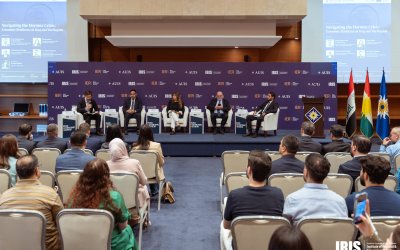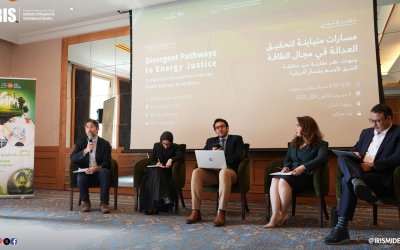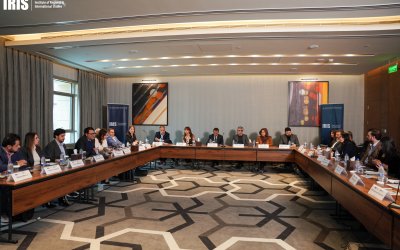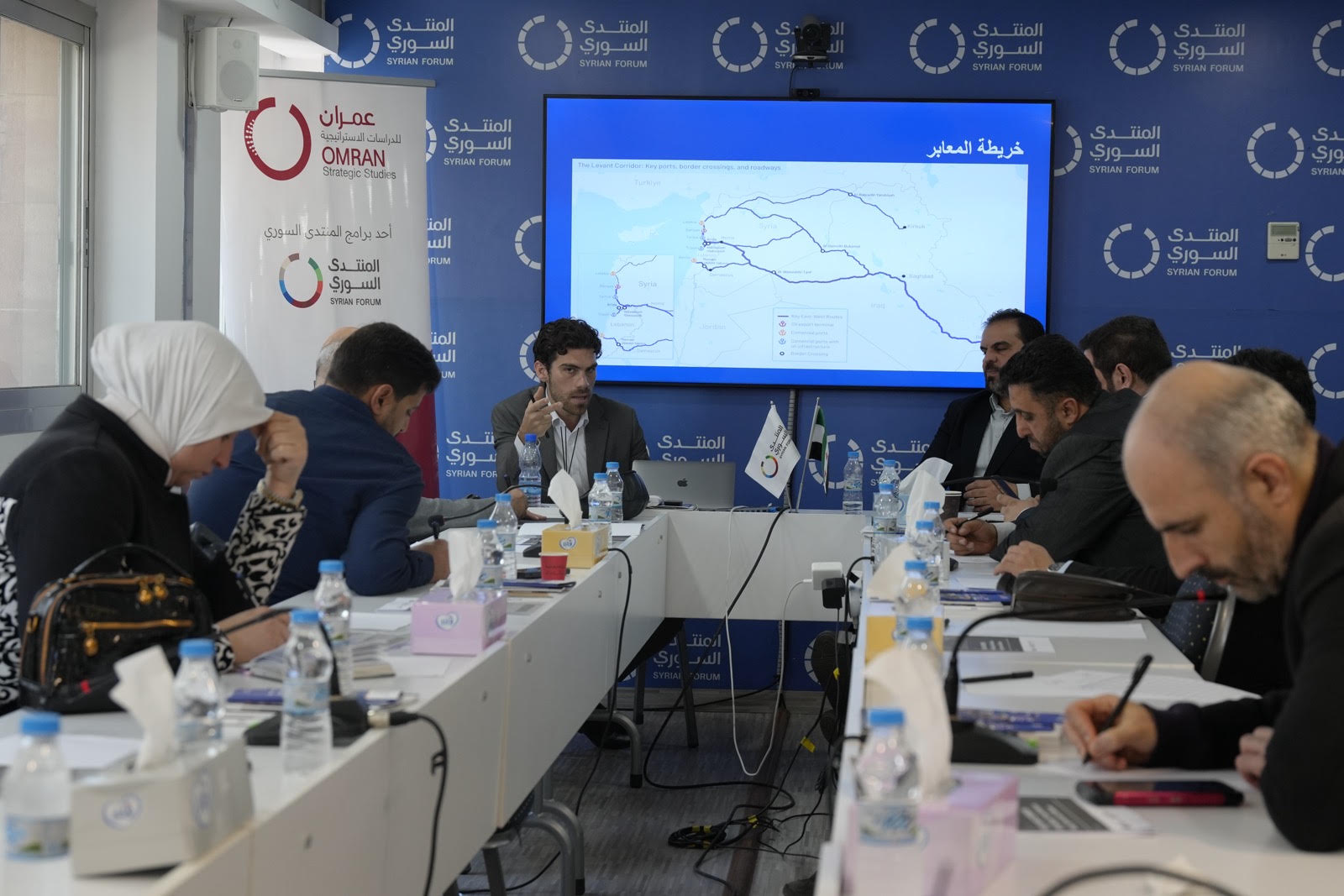
The Institute of Regional and International Studies (IRIS) at the American University of Iraq, Sulaimani (AUIS) presented findings from its XCEPT research project at two roundtable discussions on Monday, November 16, 2026. The roundtables were hosted in Damascus by the Omran Center for Strategic Studies. They brought together policymakers, researchers, and practitioners to examine the project’s analysis of the Levant Corridor and cross-border trade between Iraq, Syria, and Lebanon.
The disruption of maritime transit through the Strait of Hormuz has given new strategic weight to the overland routes linking Iraq to the Mediterranean through Syria and Lebanon. Since April 2026, Iraqi oil has been crossing into Syria. That shift has focused attention on the infrastructure, procedures, and payment systems that govern trade along the corridor. The roundtables examined the customs, inspection, and financial arrangements that shape current trade flows, and the steps needed to align them across the three countries.
The research was presented by Abdulla Al-Kalisy, Senior Researcher at IRIS. The discussions were chaired by Ayman Al-Dassouke, Researcher at the Omran Center for Strategic Studies.
The roundtables form part of the XCEPT research project on the Levant Corridor. IRIS leads the project in partnership with the Issam Fares Institute for Public Policy and International Affairs (IFI) at the American University of Beirut and in collaboration with the Omran Center for Strategic Studies. The project is supported by the XCEPT Research Fund and UK International Development. Its findings are being published in a series of policy briefs on the corridor’s infrastructure and trade governance, the most recent of which is available here: The Levant Corridor: Rebuilding Trade Between Iraq, Syria and Lebanon