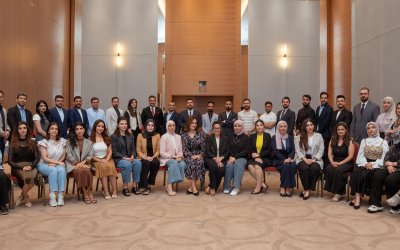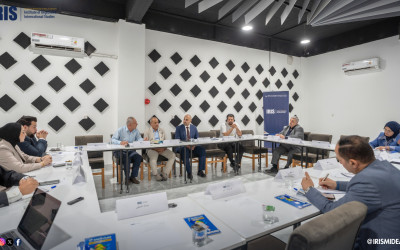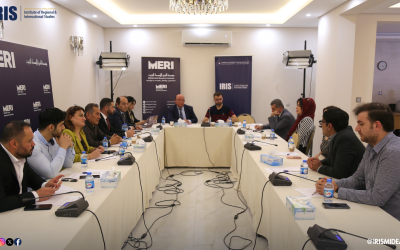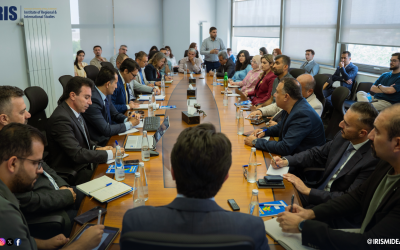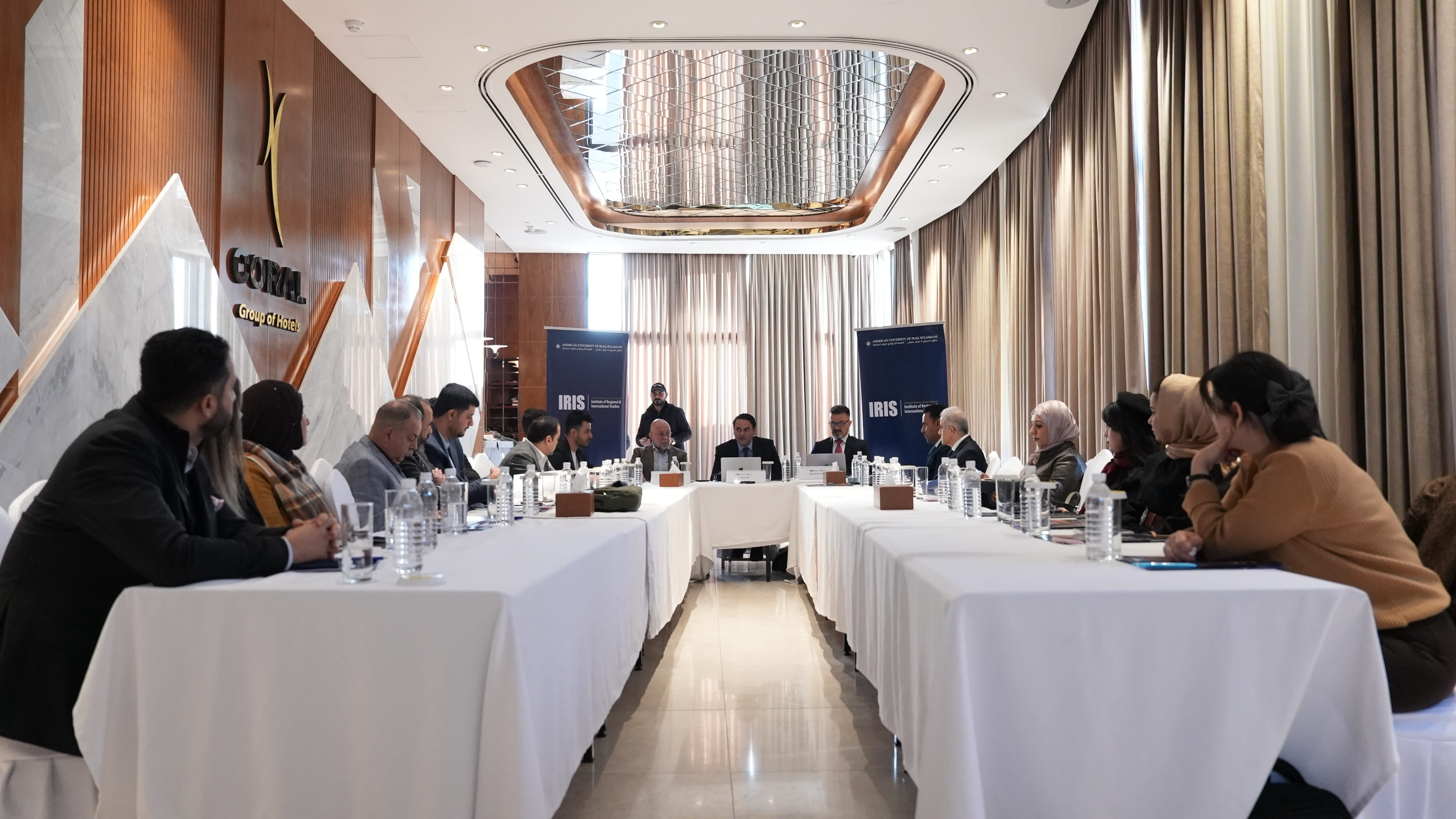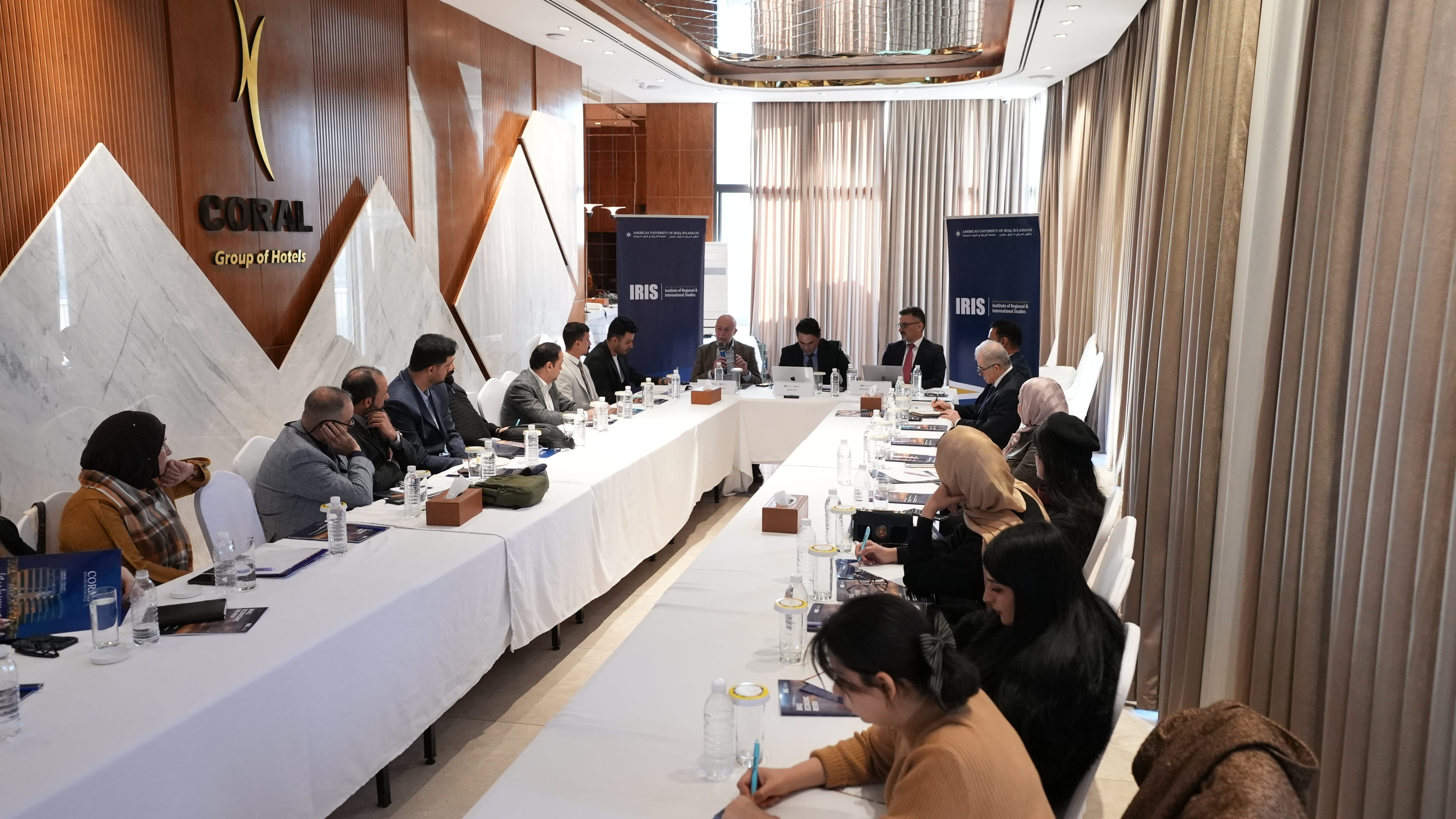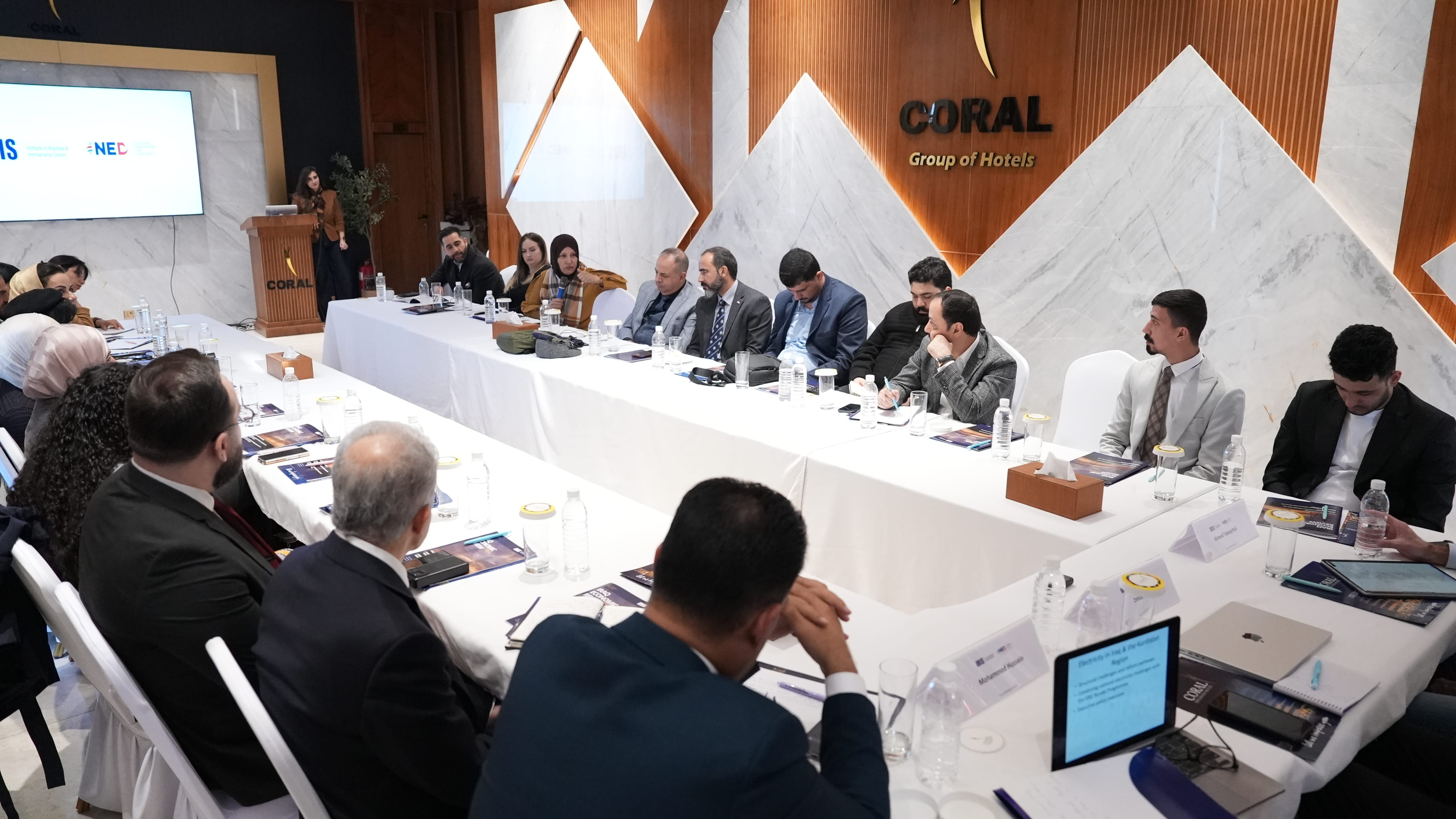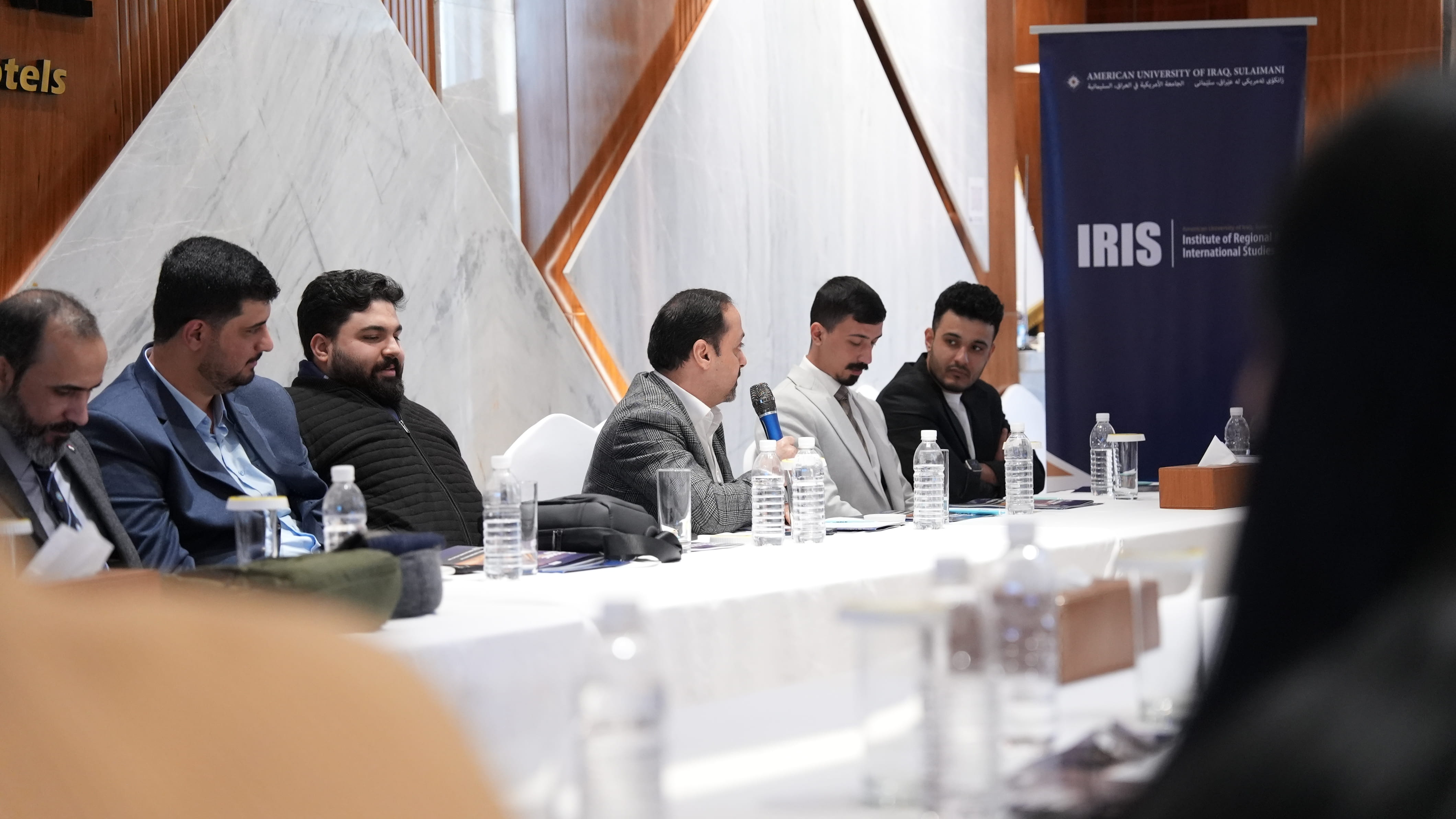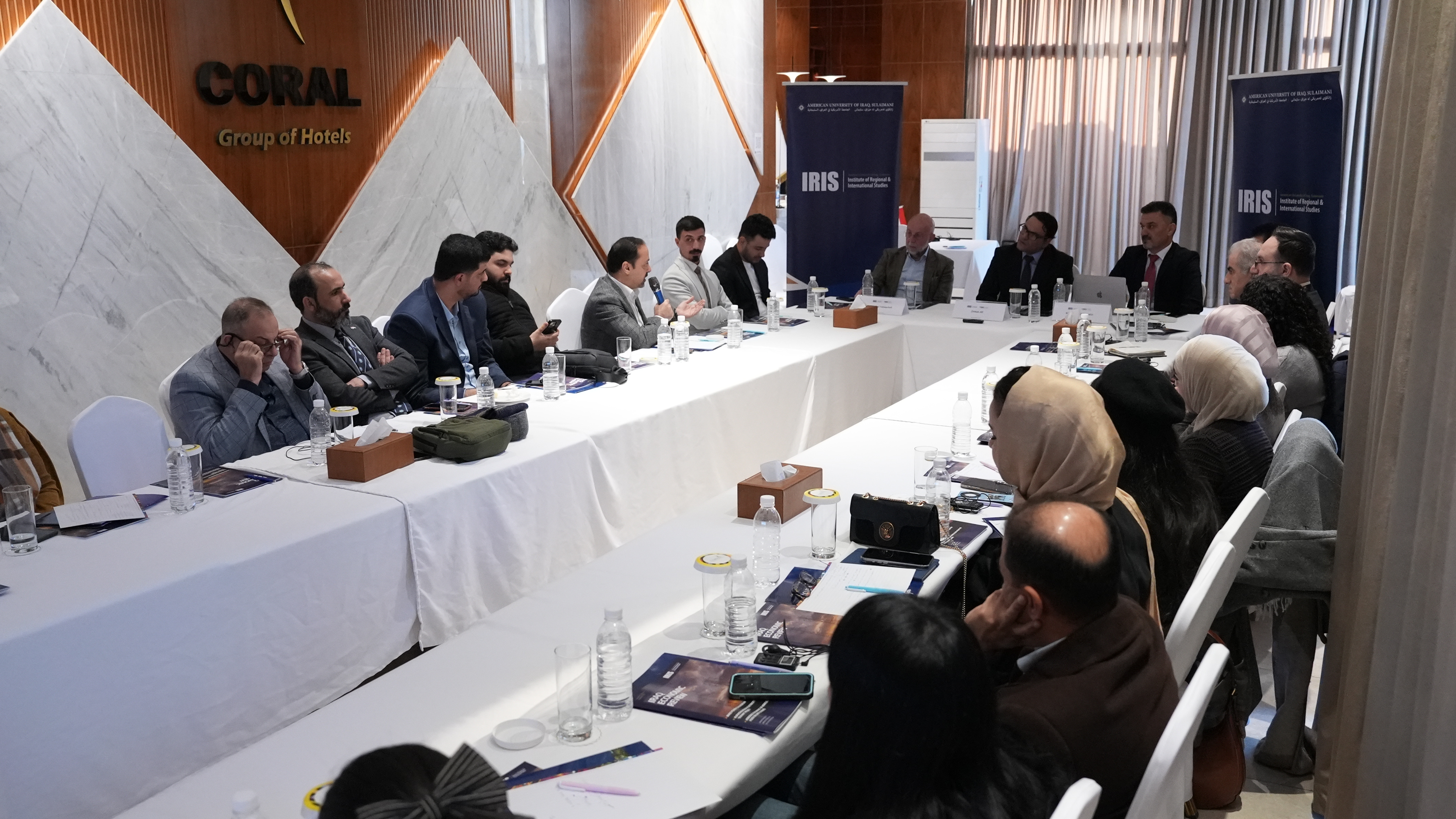
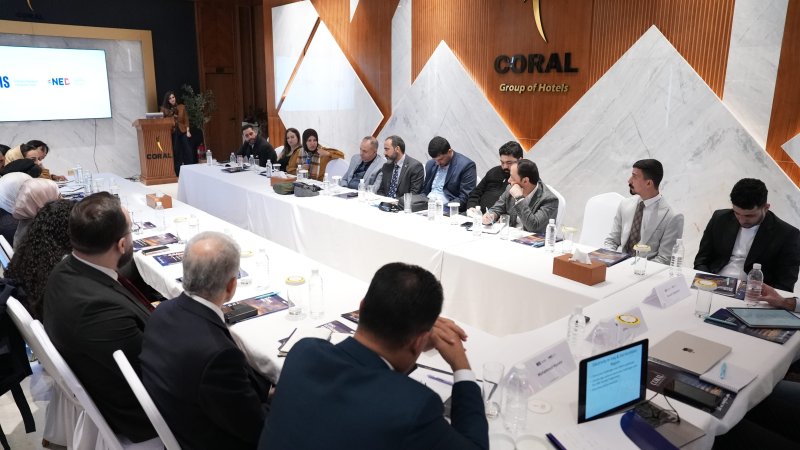
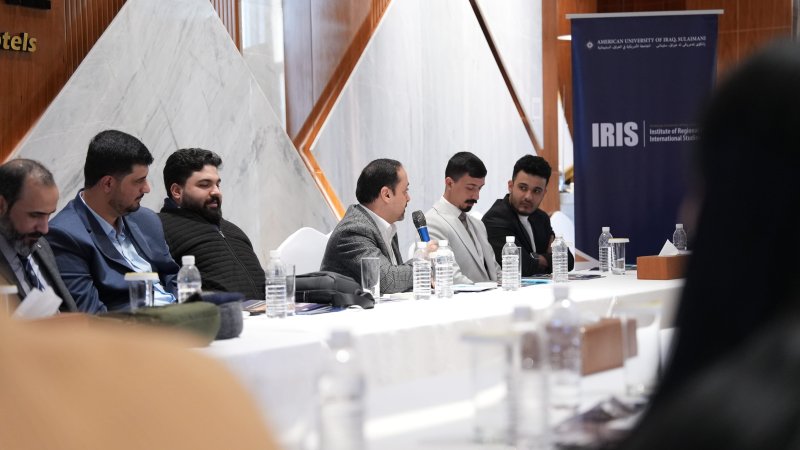
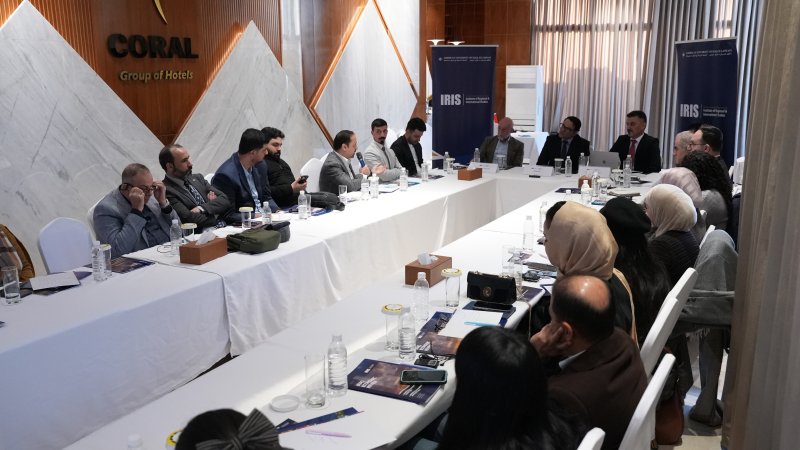
On December 20, 2025, the Institute of Regional and International Studies (IRIS) hosted a roundtable discussion in Baghdad titled “Iraq’s Energy Sector Under the New Government: Navigating Challenges and Unlocking Opportunities.” The event brought together experts from key Iraqi government institutions, independent researchers and academics, as well as representatives from civil society organizations, the private sector, and the media.
The event centered on the eleventh edition of the Iraq Economic Review, which served as a key reference for the discussions and informed the overall theme of the event. In light of Iraq’s recent elections and the anticipated transition toward a new government, participants assessed the current state of the energy sector under Prime Minister Mohammad Shia al-Sudani while considering how policies may evolve under the next administration. Discussions reviewed recent initiatives undertaken during the Sudani government, including efforts to expand electricity generation capacity, advance gas-capture projects aimed at reducing flaring, and pursue new agreements to import energy and invest in domestic production. At the same time, participants raised questions about whether the incoming government will sustain these policies, accelerate reform, or adopt alternative approaches to address persistent structural weaknesses.
“Over the past decade, the Kurdistan Region has faced a deep fiscal crisis that has made it difficult for the government to maintain public services, pay salaries on time, and invest in infrastructure,” said Ahmed Tabaqchali.
Participants examined how Iraq’s leadership can tackle longstanding challenges in the energy sector while leveraging emerging opportunities to support economic stability and sustainable development. Discussions highlighted an energy landscape marked by aging infrastructure, high levels of gas flaring, inefficiencies in electricity generation and distribution, and ongoing federal–regional governance challenges.
"Unless the KRG clearly communicates and delivers support for low-income households, the new system will essentially transfer a large share of electricity costs from the government to ordinary citizens,” said Mohammed Hussein.
Looking ahead, contributors outlined several possible trajectories for the sector, including deeper investment in natural gas utilization, modernization of the oil and electricity systems, expanded private-sector participation, and accelerated deployment of renewable energy to reduce reliance on imports.
“Our ministry is working to address a wide range of climate challenges, but limited funding has made it difficult to implement many essential projects,The new government should place greater priority on climate issues and allocate more resources to support locally driven environmental initiatives, said Dr. Ammar Atiya, advisor to the Ministry of Environment and Climate Change. “
At the same time, participants emphasized opportunities created by global shifts toward decarbonization and energy diversification. These include reducing flaring through integrated gas-capture projects, attracting long-term investment, strengthening regulatory frameworks, and expanding renewable energy initiatives to help alleviate electricity shortages, enhance energy security, and reduce fiscal vulnerability. Collectively, the discussion underscored that the direction taken by Iraq’s next government will be decisive in determining whether the country can move from crisis management toward a more sustainable and resilient energy future.